

In challenging times, when funding becomes unpredictable, how do you sustain access to programs so users can continue to benefit? 3C’s work with the Center for Safe & Resilient Schools and Workplaces (‘Center’) does just that.
For 25 years, the Center has supported school communities before, after, and during crises. Its interventions and staff trainings comprise a multi-tiered system of trauma-informed support and education for K-12 students and adults in school settings, from administrators and teachers to support staff and security professionals.
Cost, time, and staffing demands for in-person delivery of staff training and student interventions create a ceiling effect that limits a program’s possible reach.
The Center partnered with 3C to create their suite of online programs. Using 3C’s Dynamic e-Learning Platform (DeLP), the team combined audio-visual components for didactic learning with multimodal interactives for exploration and practice to translate the Center’s programs into effective online experiences.
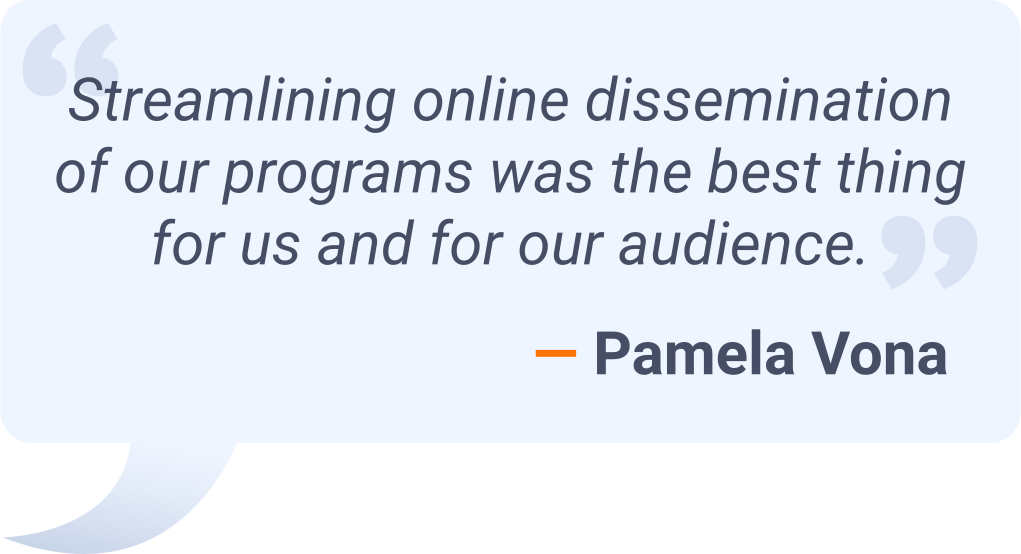
While online applications aren’t a full replacement for in-person delivery, they do allow the Center to focus their in-person efforts on high-yield consultation and support activities, as well as substantially increase the reach of their programs into school communities. As Center co-founder and COO Pamela Vona puts it, “Our suite of online applications allows us to be more intentional about deepening knowledge and practice through live coaching and online support.”I
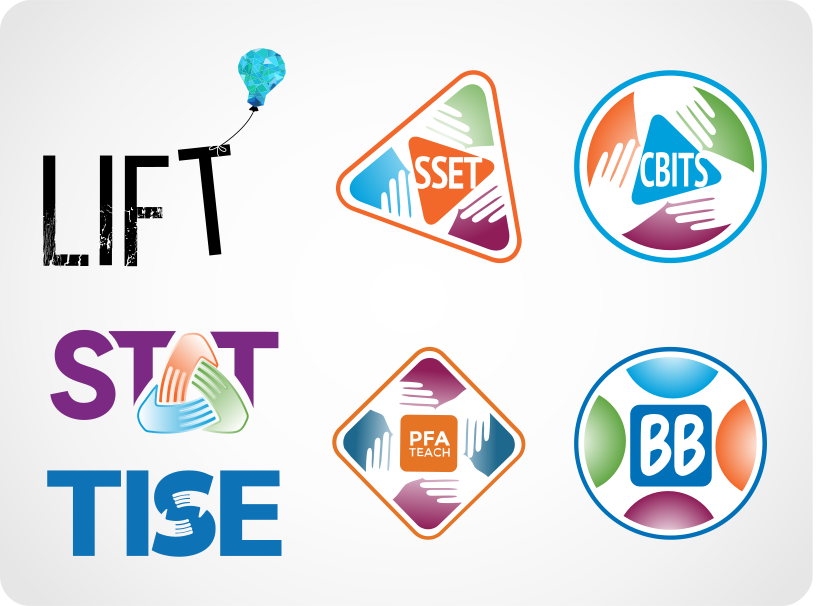
Originally, each of the Center’s programs was hosted on a separate website. Someone interested in learning about using Psychological First Aid in schools might find that website but not the sites for the equally helpful TISE (Trauma-Informed Skills for Educators) or STAT (Support for Teachers Affected by Trauma) courses. They might also never know there were companion self-paced interventions they could use with K-12 students in the CBITS (Cognitive Behavioral Intervention for Trauma in Schools) and Bounce Back online programs.
Ms. Vona notes, “It was really disjointed. You had to go to a separate site. And you wouldn’t necessarily know that there were other trainings and interventions that would be helpful.”
To address this disconnect, 3C created a one-stop intervention hub with all of the Center’s programs under one online roof.
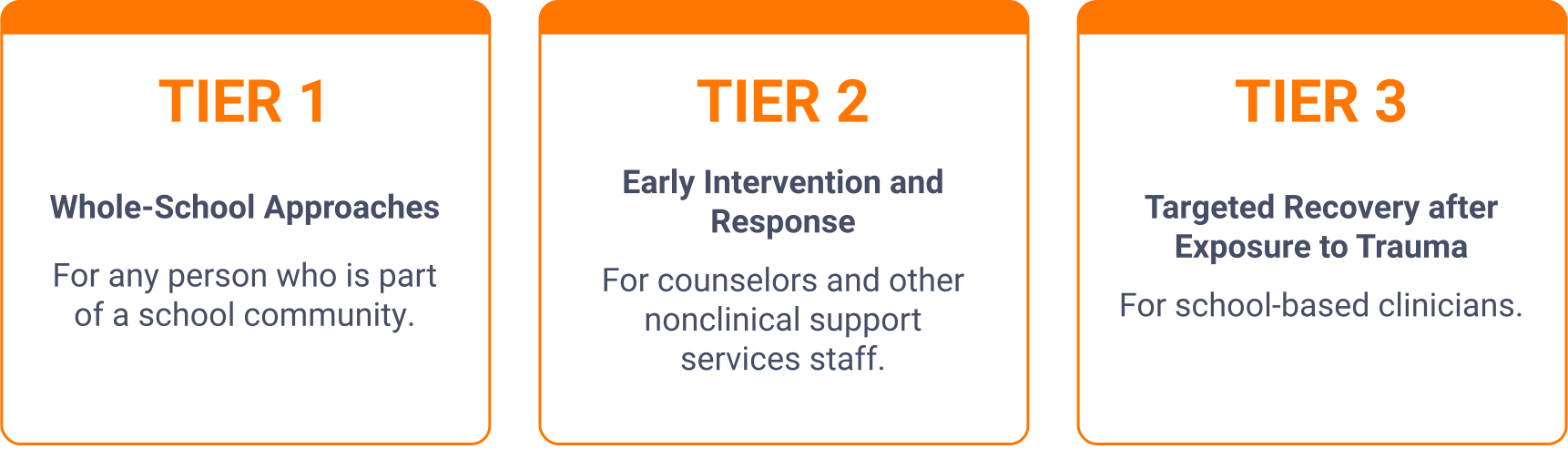
Programs are organized by tier and audience so users can find the programs most relevant to them, and e-commerce functions streamline the purchase of licenses and use of purchased programs. Further, centralized communication with the public is optimized. Ms. Vona notes, “Now that the website is so user-friendly, we can showcase our entire trauma-responsive framework.” As a result, the Center has experienced a substantial increase in reach with sales to school communities across the U.S.
Ensuring a sustainable business model is more critical than ever. As with many organizations, creation and testing of the Center’s programs was largely funded by federal grants. However, organizations today can’t depend on grant funding to sustain their programs into the future. By partnering with 3C, the Center is able to realize sufficient funds to cover the ongoing costs for hosting, maintenance, and support of their evidence-based programs.
Contact [email protected] to learn how 3C Institute can help your organization increase its reach, facilitate access to and use of its programs, and establish a sustainable business model to ensure positive impact into the future!
Dr. Childress obtained her PhD in psychology at the University of North Carolina at Chapel Hill. Prior to coming to 3C Institute, she served as a research associate and a postdoctoral fellow in the Carolina Institute for Developmental Disabilities at the University of North Carolina at Chapel Hill working on a longitudinal imaging study aimed at identifying the early markers of autism through behavioral and imaging methodologies. She has 19 years of autism research experience, during which she has examined the behavioral, personality, and cognitive characteristics of individuals with autism and their family members. Dr. Childress also has experience developing behavioral and parent report measurement tools, coordinating multi-site research studies, and collecting data from children and families. She has taught courses and seminars in general child development, autism, and cognitive development at the University of North Carolina at Chapel Hill.